
The School-Commute Suspension Problem
You received a license suspension notice and your first thought wasn't the legal consequences or the fine. It was Monday morning and whether you can still make it to campus. Missing class isn't an option when you're already borderline on attendance, carrying a full course load at community college, or three months from finishing a vocational certification that requires in-person lab hours. The suspension letter says nothing about school — just that your driving privilege is revoked effective immediately.
Most states allow restricted driving for school purposes through a hardship license program, but the approval pathway depends on your state's specific terminology and whether your underlying suspension trigger qualifies. Texas calls it an Occupational Driver's License and explicitly covers educational institution commute. Georgia's Limited Driving Permit allows school hours with registrar verification. Ohio's Limited Driving Privileges program requires proof of enrollment and a detailed class schedule. The common thread: you need documented proof that losing campus access threatens your educational continuity, and in most cases you need SR-22 insurance filing to activate the restricted license.
Compare car insurance rates in your state
Get quotes from licensed carriers — no obligation, no spam, results in minutes.
Get Your Free QuoteNon-Owner SR-22 Savings
$40–$80/month
Students driving a parent's car or borrowing a roommate's vehicle pay $40–$80/month less with non-owner SR-22 policies compared to standard owner liability. The non-owner policy proves financial responsibility without insuring a specific vehicle you don't own.
Industry premium data, 2024
What School-Hardship Approval Actually Allows
School-purpose hardship licenses restrict you to campus commute during class hours plus a reasonable travel buffer. The approved window typically covers your documented class schedule start-to-end plus 30–60 minutes before first class and after last class for travel time. Approved routes run from your residence address to the campus address listed on your enrollment verification. Some states allow one additional stop for required school activities if documented in the hardship application.
Getting caught driving outside approved hours or routes triggers automatic revocation in most states, often with no grace period and a mandatory waiting period before reapplication. The enforcement mechanism varies: some states flag hardship license holders in patrol systems so any traffic stop triggers a route-and-time check; others rely on violation reporting but impose severe penalties when violations surface. The restriction is not advisory. It is a legal condition with immediate consequences.
Documentation requirements are specific. Most states require a registrar or attendance office letter confirming current enrollment, your class schedule with building locations and meeting times, and the physical campus address. High school students typically provide a letter from the principal or attendance coordinator. Community college and vocational students provide registrar verification on official letterhead. The letter must state that you are enrolled, attending, and that loss of transportation threatens your ability to continue the program. Generic letters get applications denied.
The blocker: you were approved for school-hardship driving but no carrier explained that non-owner SR-22 costs half what you're paying for standard liability on a car you don't own.
Non-Owner vs Standard SR-22 for Students
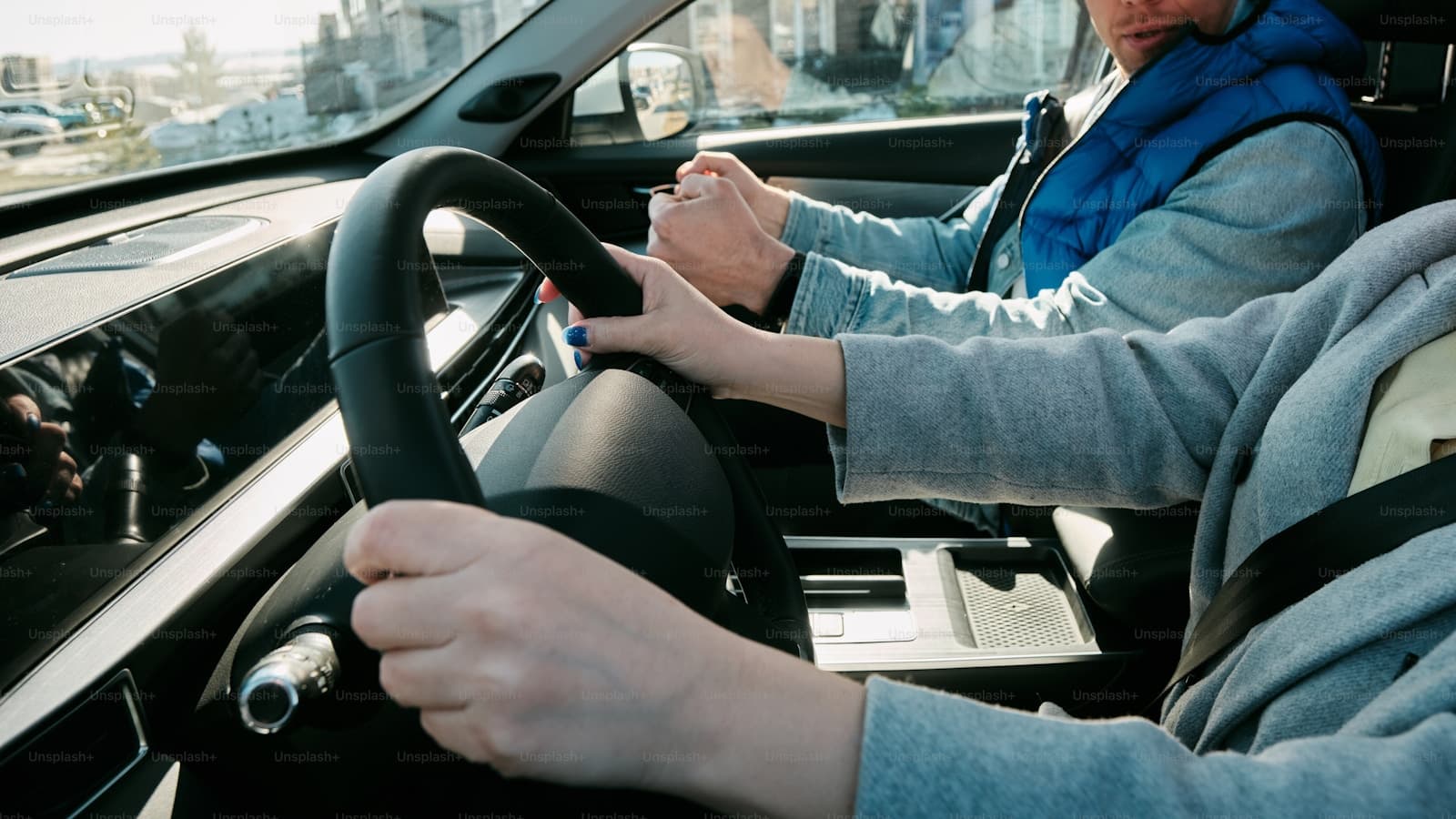
Non-owner SR-22 policies cover you as a driver when you operate someone else's vehicle. Premium costs $40–$120/month depending on your state and underlying violation. The policy does not insure a specific car; it follows you across any vehicle you drive with permission. Because the carrier assumes lower risk than insuring a specific vehicle with collision and comprehensive exposure, the premium is substantially lower than standard owner liability. For students driving a parent's car to campus, this is the correct product.
Standard owner SR-22 policies insure a specific vehicle you own or are listed as primary driver on. Premium costs $90–$250/month for minimum state liability limits, higher if you add collision or comprehensive. You pay more because the carrier is covering vehicle damage exposure in addition to liability. If you don't own the car and your name isn't on the title, this is the wrong product and you are overpaying by $50–$130/month for coverage you don't need.
Related Articles





State-Specific SR-22 Setup for School Hardship
SR-22 is not insurance. It is a certificate filed by your insurance carrier with your state DMV proving you carry at least minimum liability coverage. The filing requirement attaches to specific suspension triggers, most commonly DUI, uninsured driving, excessive points accumulation, and certain reckless driving convictions. If your suspension resulted from unpaid tickets, failure to appear, or child support arrears, your state typically does not require SR-22 unless the suspension involved a lapse in insurance coverage.
Filing setup works the same whether you're applying for school-hardship or full reinstatement. You purchase a liability policy from an SR-22-authorized carrier. The carrier files the SR-22 certificate electronically with your state DMV, typically within 24–48 hours. The DMV receives the filing and updates your record to show proof of financial responsibility. Most states then mail a confirmation letter within 5–10 business days. You must maintain continuous SR-22 coverage for the full filing period, typically 3 years from the suspension effective date or conviction date depending on your state's calculation method.
The school-hardship application process runs parallel to SR-22 setup but requires additional documentation. You file the hardship petition with your state DMV or motor vehicle division, submit the school enrollment and schedule verification, pay the application fee — typically $50–$150 depending on state — and wait for adjudication. Processing times vary by state: Texas processes Occupational License applications in 7–14 business days, Georgia Limited Permits in 10–20 business days, Ohio in 15–30 business days. Most states require active SR-22 filing on record before approving the hardship license, so you coordinate timing carefully to avoid application rejection for missing proof of insurance.
Typical SR-22 Filing Duration
3 years
Most states require SR-22 maintained for 3 years from the date of conviction or suspension effective date. Letting coverage lapse triggers DMV notification within 24 hours and automatic re-suspension of your driving privilege, including hardship licenses. The 3-year clock restarts from the lapse date in many states.
State DMV SR-22 program rules
Cost Stack and Parent-Coordinated Coverage
The full cost to activate school-hardship driving includes hardship application fee, SR-22 filing fee, and monthly premium. Application fees run $50–$150 depending on state. SR-22 filing fees are typically $15–$50 one-time, charged by the carrier at policy inception. Monthly premium is the recurring cost: $40–$120/month for non-owner policies, $90–$250/month for standard liability if you own the vehicle.
Students under 21 face higher premiums than adult drivers because actuarial tables show elevated accident risk in that age bracket. The suspension itself adds another risk surcharge. Combined, these factors push even non-owner policies toward the $80–$120/month range for drivers under 21 with a DUI or points suspension. Adult students returning to community college or vocational programs after a suspension typically qualify for the lower end of the range, $40–$70/month, because age and violation-type risk profiles differ.
Parents coordinating coverage for a dependent student should clarify whether adding the student to the family policy with SR-22 endorsement costs less than a standalone non-owner policy. Some carriers allow SR-22 endorsement on an existing family policy for $20–$40/month additional premium if the student is already listed as an occasional driver. Other carriers require a separate policy or refuse to add SR-22 endorsements to family policies entirely. The cost-minimizing approach depends on the carrier's underwriting rules and whether the student owns a vehicle or is driving a family car.
Compare Carriers and Lock the Filing
Not all carriers write non-owner SR-22 policies, and those that do vary premium by $30–$80/month for identical coverage and driver profiles. Progressive, The General, and Bristol West write non-owner SR-22 in most states and quote online or by phone within 15 minutes. State Farm and GEICO write SR-22 but often decline non-owner policies in states where their underwriting guidelines restrict high-risk non-owner business. Regional carriers sometimes offer better rates than national names but require local agent contact to quote.
Request quotes from at least three carriers. Provide your suspension trigger, conviction date if applicable, current enrollment status, and whether you own the vehicle you'll be driving. Ask explicitly whether the quote is for non-owner or standard owner coverage — some agents default to standard liability even when non-owner is appropriate because commission structure favors higher-premium products. Confirm the SR-22 filing fee, the monthly premium, and the carrier's electronic filing timeline with your state DMV.
Once you select a carrier and pay the first month's premium plus filing fee, the carrier initiates SR-22 filing electronically. Confirmation from your state DMV typically arrives within 5–10 business days. Do not let the policy lapse. Missing a payment triggers automatic lapse notification to the DMV within 24 hours in most states, and your hardship license is revoked immediately. Set up autopay or calendar reminders to avoid accidental lapse — the consequence is re-suspension and restarting the entire hardship application process from zero.