
When Your Suspension Hits Mid-Semester
Your license was suspended two weeks into the semester, and you have no way to reach campus without driving. The suspension notice arrived after your first round of quizzes, and dropping classes now means losing tuition plus falling behind on your degree track. You need to know whether your state allows hardship driving for school purposes and what your registrar must document to prove you qualify.
Most states structure hardship licenses around employment, medical treatment, and court-ordered obligations. School-purposes driving falls into a gray zone. Some states name education explicitly as an approved purpose. Others bury it under broader categories like essential daily activities or allow judicial discretion to add purposes the statute doesn't list. The procedural path depends entirely on which framework your state uses — and whether you can prove your class schedule creates the same kind of necessity that employment does.
Compare car insurance rates in your state
Get quotes from licensed carriers — no obligation, no spam, results in minutes.
Get Your Free QuoteHardship Application Processing Window
15–45 days
Most state hardship programs process school-purpose applications in 15–45 days from filing to approval. Missing your filing window pushes your approval date past the semester drop deadline, forcing you to withdraw from classes before you receive driving authorization.
State DMV hardship program guidelines
School-Purposes Coverage Across State Frameworks
States that explicitly name education as an approved hardship purpose include Texas, Georgia, Missouri, Illinois, and Ohio. Texas calls it an Occupational Driver's License and defines occupation broadly enough to include full-time students. Georgia's Limited Driving Permit covers school or college classes with proper documentation. Missouri's Limited Driving Privilege and Illinois's Restricted Driving Permit both list educational activities as qualifying purposes. Ohio's Limited Driving Privileges allow school attendance with court approval.
States that don't name education explicitly but allow judicial discretion to add purposes include California, Florida, Michigan, and North Carolina. In these jurisdictions, you petition the court or administrative hearing officer to approve school-purposes driving based on necessity. You must prove that losing access to classes creates hardship equivalent to losing employment. Approval is not automatic — it depends on the strength of your documentation and the officer's interpretation of necessity.
States that effectively prohibit school-purposes hardship driving include Washington, which eliminated occupational licenses entirely for non-DUI suspensions. If your suspension resulted from points accumulation or uninsured driving, Washington offers no hardship pathway. DUI suspensions qualify for ignition interlock restricted licenses that allow all purposes, including school. The bifurcation creates an absurd outcome where DUI students can drive to class day-one with equipment installed, while students suspended for minor violations have zero pathway.
Approved school hours must match your registrar-verified class schedule exactly. Driving 30 minutes outside documented class blocks — even to the campus library or a professor's office hours — triggers violation and immediate revocation in most states.
Registrar Documentation Requirements

The registrar verification must include your full legal name as it appears on your driver's license, your student identification number, your enrollment status for the current term, and the specific course schedule with meeting days, start times, end times, and campus locations for each class. The letter must be printed on official school letterhead, signed by a registrar or authorized enrollment officer, and dated within 30 days of your hardship application filing date. Some states require the registrar to certify that your program requires in-person attendance and that remote or online options are not available for your required courses.
The schedule verification creates the approved-hours framework the state uses to authorize your driving window. If your classes meet Monday, Wednesday, and Friday from 9:00 AM to 12:30 PM at the main campus, your hardship license authorizes driving from your residence to that campus location during those hours only. Most states add a reasonable travel buffer — typically 30 to 60 minutes before the first class and 30 to 60 minutes after the last class ends. The buffer accommodates normal commute time and parking. Driving outside the documented class block plus buffer — even to the same campus for a study group or office hours — violates the restriction and triggers automatic revocation.
Related Articles




Approved Hours and Route Restrictions
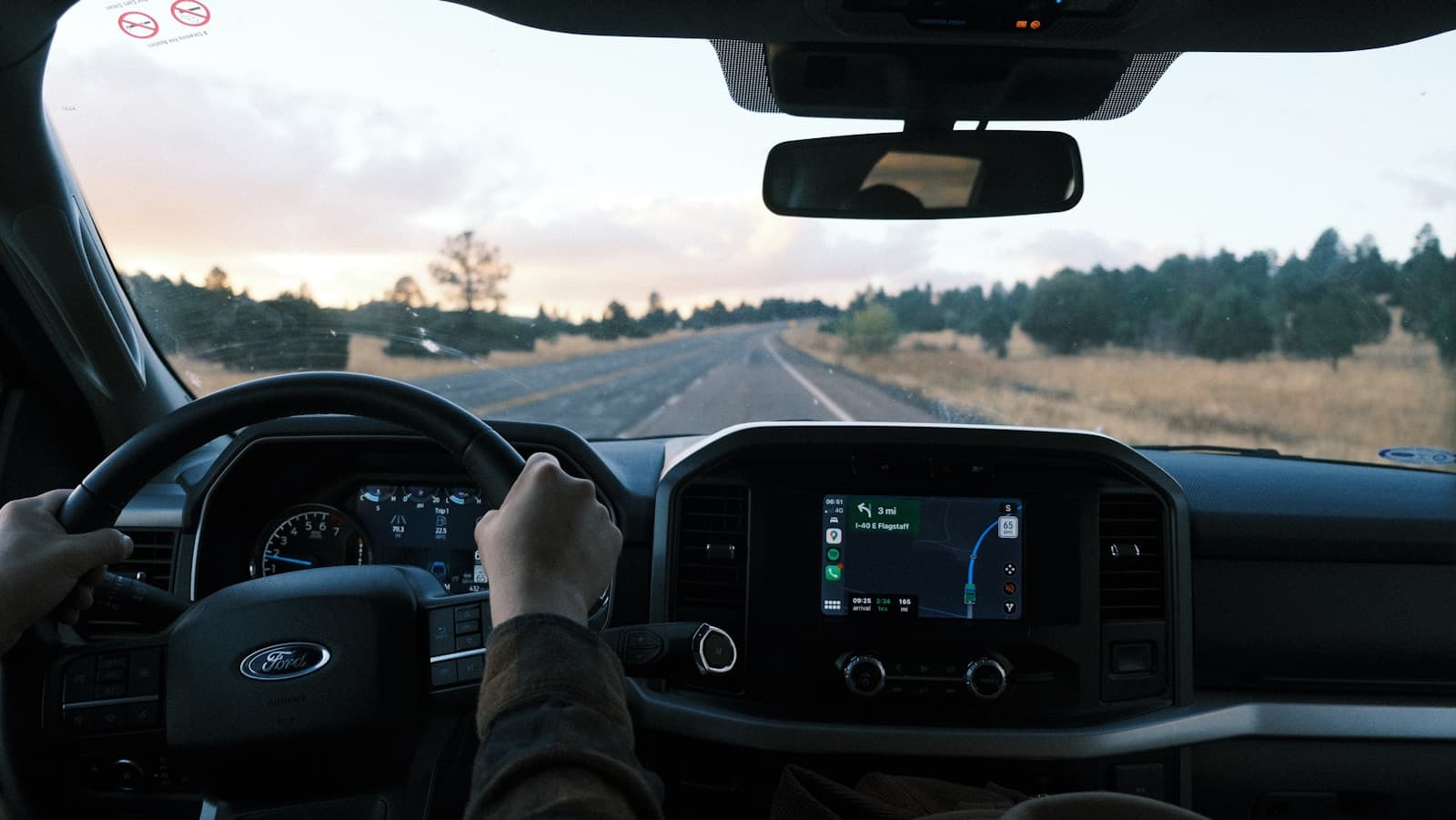
Your approved driving hours correspond exactly to your documented class schedule plus the state's standard travel buffer. If your hardship order specifies a 60-minute buffer and your first class starts at 9:00 AM, you are authorized to drive starting at 8:00 AM. If your last class ends at 12:30 PM, your authorization expires at 1:30 PM. Driving at 1:45 PM violates the restriction even if you are still on campus property. The clock is absolute.
Route restrictions limit your driving to the direct path between your residence address listed on the hardship application and the campus address documented in the registrar verification. Detouring to a gas station, coffee shop, or friend's apartment — even if all locations fall between your home and campus — violates the restriction. Most states define direct route narrowly: the shortest reasonable path given traffic patterns and road availability. Taking surface streets when the freeway is faster, or driving past campus to another location before returning, both trigger violation.
The consequence of violating approved hours or route restrictions is immediate hardship license revocation in most states. The revocation is administrative — it happens without a hearing. You receive a notice that your hardship privileges have been terminated, and your full suspension period resumes. In states that allow only one hardship application per suspension, the revocation is permanent for that suspension cycle. You cannot reapply. If your original suspension was six months and you violated your hardship license in month two, you serve the remaining four months with no driving privileges.
Hardship Application Fee by State
$75–$300
Filing fees for school-purposes hardship applications range from $75 in Missouri to $300 in California for the petition plus court costs. The fee is non-refundable. If your application is denied, you lose the filing fee and must wait out your full suspension.
State DMV and court fee schedules
Insurance Coordination and SR-22 Filing
If your suspension resulted from a DUI, reckless driving, or uninsured-at-fault accident, your state likely requires SR-22 filing before your hardship license is issued. The SR-22 is not insurance — it is a certificate your insurance carrier files with the state DMV certifying that you carry at least the state's minimum liability coverage. Your carrier charges a one-time filing fee, typically $15 to $50, and your premium increases because you are now classified as high-risk.
For students on a parent's family policy, the SR-22 filing and premium increase apply to the entire policy. Your parent's carrier may refuse to file SR-22, forcing the family to find a new carrier willing to write high-risk policies. Non-owner SR-22 policies offer an alternative if you do not own a vehicle. You purchase liability coverage in your own name, the carrier files the SR-22 under your name only, and your parent's policy remains unaffected. Non-owner SR-22 premiums typically run $30 to $60 per month for minimum state liability limits.
What Happens After Approval
Once your hardship application is approved, you receive a restricted license document or court order specifying your approved purposes, hours, and routes. Carry this document with you every time you drive — it is your proof of legal authorization. If you are stopped by law enforcement, the officer will verify that your current time, location, and direction of travel fall within your approved restrictions. Driving outside those restrictions results in a new charge: driving on a suspended license with a restricted license violation.
Most states require you to renew or extend your hardship license if your suspension period exceeds the initial approval duration. Texas Occupational Licenses are typically granted for the full suspension period. Illinois Restricted Driving Permits must be renewed every 90 days during the suspension. Georgia Limited Driving Permits expire after 12 months and require reapplication if your suspension continues. Miss the renewal deadline and your hardship authorization lapses — you return to full suspension status until you reapply and the renewal is processed. Track your expiration date and file renewal paperwork at least 30 days before expiration to avoid a lapse.
Your next step depends on where your suspension originated and what documentation you can gather. If your state explicitly allows school-purposes hardship driving, start by requesting a registrar verification letter that includes your full class schedule with specific meeting times and campus locations. If your state does not name education as an approved purpose, contact the court or DMV hearing office that handles hardship petitions and ask whether they have approved school-purposes driving in prior cases. Build your necessity argument around the consequences of losing access to your classes: tuition loss, program delays, certification requirements, graduation impact. Compare non-owner SR-22 quotes if your suspension requires filing and you want to keep your parent's policy separate.