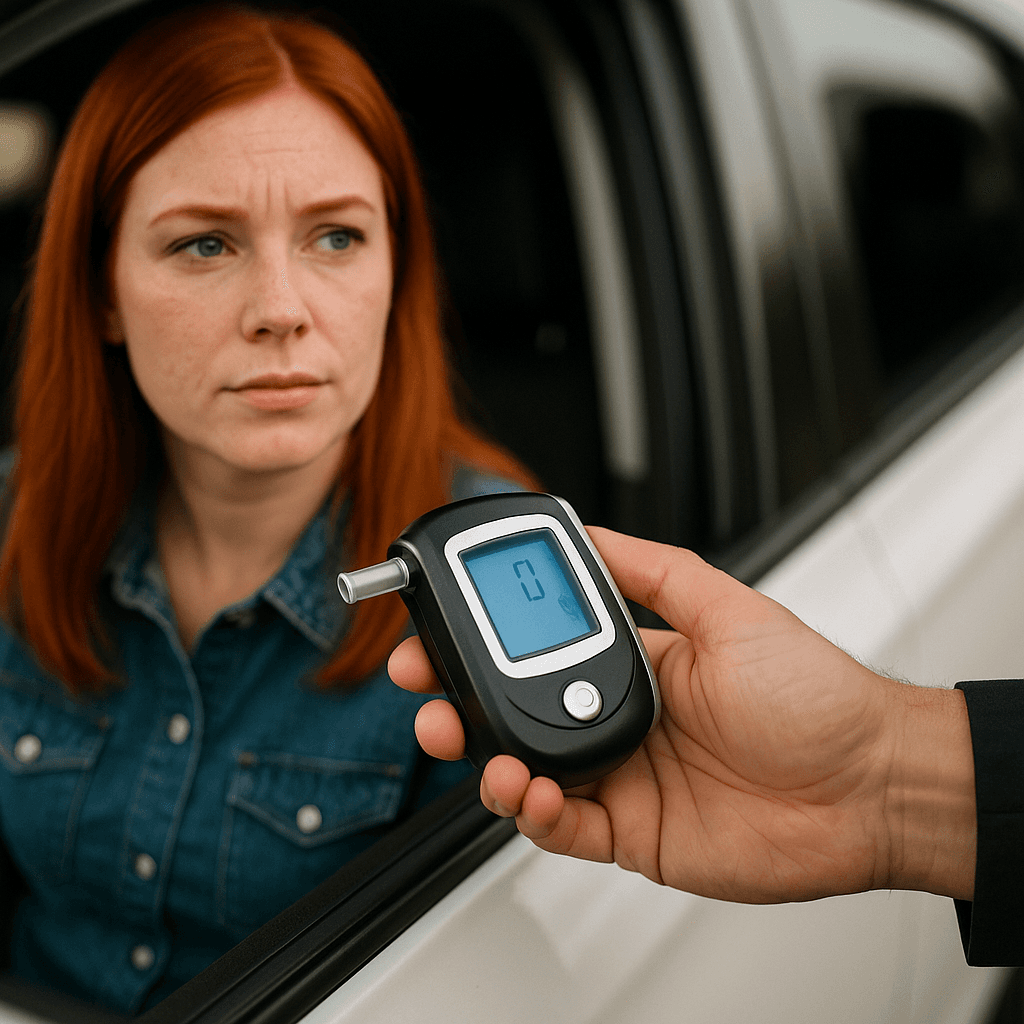
The Court Order Says Attend or Face Jail
You received a DUI conviction with a mandatory alcohol education program—12 weeks, 24 weeks, or longer depending on your state and BAC at arrest. The court order specifies in-person attendance at a state-approved provider. Your license is suspended for the same DUI. Missing a single class can trigger probation violation proceedings, extended suspension, or immediate jail time in many jurisdictions. You need legal authorization to drive to and from those classes.
Most states allow restricted driving for court-ordered DUI programs under a hardship license, occupational license, or restricted driving permit. The state-specific name varies, but the core function is identical: you apply for limited driving privileges that cover the commute to your DUI school, possibly work, and sometimes medical appointments. The application process, required documentation, approved hours, and ignition interlock device requirements differ sharply by state. Some states grant temporary permits while your application processes; others require you to arrange alternate transportation until final approval.
Compare car insurance rates in your state
Get quotes from licensed carriers — no obligation, no spam, results in minutes.
Get Your Free QuoteTypical Hardship Processing Window
10–21 business days
Most state DMVs process hardship applications within two to three weeks of submission, but Texas and Georgia routinely exceed 25 days during high-volume periods. If your first DUI class is scheduled within 14 days of your suspension effective date, you will need alternate transportation for early sessions unless your state issues a temporary permit during processing.
State DMV administrative processing averages, 2023
What a DUI-School Hardship License Actually Covers
A hardship license for DUI school authorizes you to drive during specific hours to specific locations. The court order proving mandatory attendance is the qualifying anchor—voluntary DUI classes do not meet the threshold in most states. Your approval letter or restricted license will list approved purposes: typically the direct commute between your residence and the DUI program provider, possibly work if you submit employer verification, and medical appointments if documented by a physician.
Route and time restrictions are enforced strictly. If your DUI class meets Tuesdays and Thursdays from 6:00 PM to 8:00 PM, your restricted driving window covers travel to and from that location during those hours plus a reasonable buffer—usually 30 minutes before and after class. Driving outside approved hours, stopping at non-approved locations, or deviating from the direct route voids the permit immediately and triggers new charges in most states. Law enforcement can verify your class schedule against the DMV database during a traffic stop.
Some states bundle work commute authority automatically when you apply for DUI-school hardship; others require separate employer documentation and limit work-driving to specific shifts. If you work variable hours or multiple job sites, disclose that in the application—silent omissions discovered later result in revocation without appeal in many jurisdictions.
Missing your DUI school enrollment deadline voids hardship eligibility in 11 states. The deadline is counted from your suspension effective date, not your conviction date or your application submission date.
The Application Path: What You Submit and When

Start with the court order or sentencing judgment proving mandatory DUI education. The document must name the specific program provider, class schedule, and total required hours. Generic probation orders stating "complete DUI education" without provider details are rejected in most states—you will need the probation officer to amend the order or the DUI program to issue an enrollment letter on agency letterhead confirming your registration, class days, and location. Photocopy the signed original; do not submit the only copy you have.
Next, complete the state's hardship application form. This is not a generic driver's license form—it is a separate restricted-driving petition specific to suspension cases. The form asks for your suspension case number, the violation that triggered suspension, your requested driving purposes, and the addresses you need to travel between. Attach proof of SR-22 insurance filing if your state requires it for DUI suspensions—Florida, Virginia, California, and Texas mandate SR-22 before hardship approval; Georgia and Illinois allow hardship first, SR-22 within 30 days. If ignition interlock is required, attach the IID installation invoice or certificate proving the device is installed and calibrated. Some states require the IID serial number on the application form itself.
Related Articles





Ignition Interlock and DUI School Hardship Timing
States with all-offender IID laws require device installation before hardship approval for any DUI-triggered suspension. This includes first-offense DUIs in Arizona, New Mexico, Utah, and several others depending on BAC thresholds. The IID vendor must submit proof of installation directly to the DMV—your application cannot proceed until that filing hits the state database. Budget 3 to 7 business days for vendor-to-DMV communication after installation. If your DUI school starts before IID proof clears, you need alternate transportation for early classes.
In states where IID is required only for second or aggravated DUIs, check your sentencing order carefully. Courts sometimes mandate IID as a probation condition even when the state DMV does not require it for hardship eligibility. If the court order lists IID, install it before applying—processing clerks flag the discrepancy and your application will stall. If IID is not mentioned in the court order and your state does not require it for first-offense DUIs, you can apply without it. Do not install IID preemptively assuming it will speed approval; unnecessary installations cost $75–$150 and cannot be removed without DMV authorization once registered.
SR-22 filing follows similar sequencing rules. If your state requires SR-22 for DUI suspensions, the insurance company must file the SR-22 certificate with the DMV before your hardship application is reviewed. The filing shows as pending in the DMV system for 24 to 72 hours after your insurer submits it. Apply for hardship only after confirming SR-22 filing is complete—call the DMV or check your online driver record to verify the SR-22 appears as active. Premature applications are returned unfiled in most states, restarting your processing clock.
What Happens If You Miss a Class
DUI education programs report attendance directly to the court and probation office, and in many states to the DMV. Missing a class without prior approved excuse—medical emergency documented by a physician, verified work conflict, jury duty—triggers automatic notification to all three agencies. If you are driving on a hardship license specifically granted for DUI school attendance, missing class without excuse can result in immediate hardship revocation before you receive written notice. Some states build one excused absence into the hardship terms; others enforce zero tolerance.
The probation violation is the more serious immediate consequence. Courts treat DUI program non-compliance as willful probation breach unless you prove impossibility. A flat tire, childcare conflict, or forgotten class date will not meet the standard in most jurisdictions. The probation officer can petition for revocation of probation, imposition of suspended jail time, or extension of probation and suspension periods. Hardship license revocation follows automatically in most cases once probation violation is filed.
DUI School Hardship Application Fee Range
$200–$450
Hardship application fees vary sharply by state. Florida charges $25 for Business Purposes Only license applications; California charges $125 for restricted license petitions; Illinois charges $50 for Monitoring Device Driving Permit applications when IID is required. Add IID installation ($75–$150), monthly IID monitoring ($60–$90/month), and SR-22 filing ($15–$50) when applicable.
State DMV fee schedules, 2024
State-Specific Program Names and Approval Paths
Texas calls it an Occupational Driver's License and processes applications through the county court where your DUI was adjudicated, not the DMV. You file a petition with the court clerk, pay the filing fee, and attend a hearing where the judge decides whether to grant restricted driving. Texas approves DUI-school commutes routinely but requires employer affidavits for work driving and limits total driving hours per week. Processing takes 10 to 30 days depending on court docket volume.
Georgia issues a Limited Driving Permit through the Department of Driver Services after you complete a DUI Risk Reduction Program enrollment and pay the $25 application fee. Georgia allows DUI school, work, medical appointments, and grocery shopping under a single permit, but you must list every approved address on the application. Driving to an unlisted location—even another grocery store in the same chain—is treated as driving without a license. Florida's Business Purposes Only license covers employment and DUI school but excludes personal errands entirely; educational purposes require separate documentation proving enrollment at an accredited institution, which DUI programs typically satisfy.
Apply Before Your First Class Date
Submit your hardship application the same week you receive your suspension notice and DUI program enrollment confirmation. Do not wait until the week before your first class—you will not receive approval in time. Gather the court order, DUI program enrollment letter, proof of SR-22 filing if required, IID installation certificate if required, employer verification if you are requesting work driving, and payment for the application fee. Call the DMV or visit the state website to confirm the exact form name and submission process—some states accept online applications; others require in-person filing or certified mail.
If your state does not issue temporary permits and your first class starts before hardship approval, arrange alternate transportation now. Driving on a suspended license to attend DUI school does not qualify as necessity defense in any state—you will face additional charges, extended suspension, and automatic hardship denial if caught. Uber, family members, or public transit for the first two to three classes is cheaper than the legal consequences of premature driving. Once your hardship approval letter or restricted license card arrives, verify the approved hours and locations match your submitted documentation before driving. Errors happen; discovering a mismatch after a traffic stop is too late to correct without penalty.