
Your License Is Suspended and School Starts Monday
You received a suspension notice from the New York DMV and your campus is 40 minutes from home with no public transit option. Missing class means failing the semester. Your state offers a pathway called a Restricted Use License that allows driving to and from school during suspension, but the application process involves carrier-verified insurance reporting, possible ignition interlock installation, and a documentation stack that rejects most first attempts when applicants misunderstand what the DMV requires.
This article opens at the procedural failure point most New York student drivers hit: the DMV denied their Restricted Use License application because they showed up with an SR-22 form (New York does not use SR-22), missed the ignition interlock requirement (mandatory for all DWI cases under Leandra's Law), or brought incomplete school documentation. The path forward requires understanding New York's IIES insurance verification system, the specific documents your school registrar must provide, and the DMV's broad administrative discretion in granting or denying restricted licenses.
Compare car insurance rates in your state
Get quotes from licensed carriers — no obligation, no spam, results in minutes.
Get Your Free QuoteNY Restricted Use License Application Fee
$25
New York charges a $25 application fee for the Restricted Use License (MV-500 series forms). This is separate from the $50 suspension termination fee you will pay when your full license is reinstated. The application fee is non-refundable even if the DMV denies your request.
NY DMV MV fee schedule
New York Calls It a Restricted Use License, Not a Hardship License
New York's official program name is the Restricted Use License. The DMV does not use the term hardship license in any statute or application form. Searching for hardship license eligibility on the DMV website returns zero results. The correct form series is MV-500, and the application path runs through your regional DMV office, not through the courts.
The Restricted Use License allows driving for specific approved purposes: travel to and from work, school, medical appointments, and other court- or DMV-approved essential activities. It is not general-purpose driving. If you are caught driving outside your approved hours or routes, the DMV revokes the restricted license immediately and adds a violation charge to your record. School purposes qualify explicitly under New York's framework, but the DMV requires documentation proving enrollment and class schedule before approving the restriction.
This clarification matters because applicants who walk into the DMV asking for a hardship license or who bring documentation framed around hardship eligibility trigger confusion. Use the state's native terminology on every form and in every conversation with the DMV examiner. The program exists. The name is Restricted Use License.
The DMV will deny your Restricted Use License application if your insurance carrier has not reported your policy through the IIES system. No SR-22 form exists in New York. Coverage verification is electronic and carrier-initiated.
What the DMV Requires Before Approving School-Purpose Driving
The insurance requirement is where most applicants fail. New York does not use SR-22 certificates. The state operates the Insurance Information and Enforcement System (IIES), an electronic database where admitted carriers report policy issuance, cancellations, and lapses directly to the DMV in real time. When you purchase a policy from a New York-admitted carrier, that carrier reports your coverage to the DMV automatically within 24 to 48 hours. You cannot bring a paper SR-22 form to the DMV because no such form exists in New York's regulatory framework. The DMV verifies your coverage by querying the IIES database at the time of your Restricted Use License application. If your carrier has not yet reported your policy, the DMV denies your application on the spot. Call your carrier before scheduling the DMV appointment and confirm they have submitted your policy information to IIES.
The school documentation requirement is straightforward but strictly enforced. The DMV requires a letter from your school's registrar or attendance office confirming enrollment, your class schedule with specific days and times, and the campus address. A course syllabus or printed schedule from the student portal is not sufficient. The letter must be on official letterhead, signed by a registrar or attendance official, and dated within 30 days of your DMV appointment. If you attend multiple campuses (common for community college students taking lab courses at a satellite location), the letter must list all campus addresses and the days you attend each site. The DMV uses this documentation to define your approved driving hours and routes. Driving outside those parameters revokes the restricted license immediately.
Related Articles

Ignition Interlock Is Mandatory for All DWI Cases Under Leandra's Law
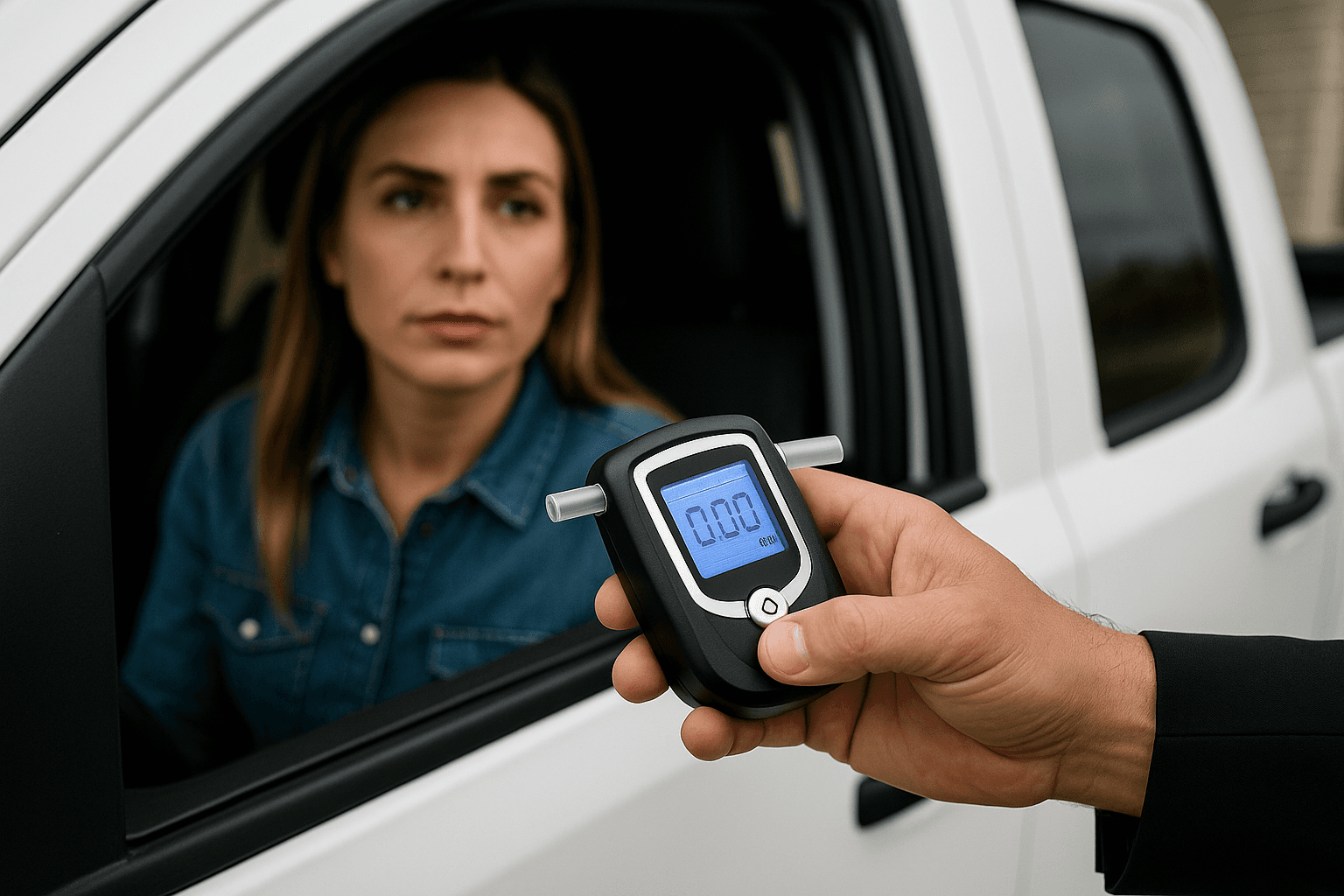
Leandra's Law (New York Vehicle and Traffic Law Section 1198) mandates ignition interlock device installation for all persons convicted of DWI or DWAI, including as a condition of any Restricted Use License granted during the interlock period. This is not discretionary. If your suspension stems from a DWI arrest, the DMV will not issue a Restricted Use License unless you provide proof of ignition interlock installation from a state-approved vendor.
The interlock requirement applies even if your conviction is still pending. New York imposes a mandatory pre-conviction license suspension at arraignment for DWI arrests (called a Pringle suspension). If you apply for a Restricted Use License during this pre-conviction period, the DMV requires ignition interlock installation before approving the restricted license. The device remains installed until your case resolves and your full license is reinstated.
Ignition interlock installation costs approximately $100 to $150 for the initial setup, plus $70 to $100 per month for monitoring and calibration. Most vendors require a 6-month minimum contract. If you are a student on a tight budget, contact the vendor and ask about indigent payment plans. Some vendors offer sliding-scale fees for students who provide proof of enrollment and financial hardship. The DMV does not waive the ignition interlock requirement under any circumstance for DWI-related suspensions, but vendors have discretion on payment terms.
DWI SR-22 Filing Duration (Non-NY States)
3 years
While New York does not use SR-22 filings, neighboring states like Pennsylvania and New Jersey require 3-year SR-22 filing periods for DWI convictions. If you move out of New York before reinstating your license, you may face SR-22 requirements in your new state of residence even if New York never required one.
PA Department of Transportation, NJ MVC
Processing Time Varies by Regional DMV Office
New York DMV does not publish a standard processing time for Restricted Use License applications. Actual turnaround varies significantly by regional office and case complexity. If your suspension is straightforward (points accumulation, insurance lapse, unpaid tickets), some offices approve the restricted license at the counter during your appointment. If your suspension involves a DWI conviction, multiple prior suspensions, or out-of-state violations, the DMV routes your application to Albany for administrative review. That review process can take 2 to 4 weeks.
Call your regional DMV office before submitting the application and ask what the current processing timeline is for restricted license applications. Do not assume same-day approval. If your school semester starts in less than two weeks, expedite the insurance reporting step by calling your carrier daily to confirm IIES submission. Some carriers report within 24 hours; others take up to 5 business days. The bottleneck is usually carrier-side, not DMV-side.
What Happens If You Drive Outside Approved Hours or Routes
The Restricted Use License is not a limited general-purpose license. It is a conditional privilege tied to specific approved activities. If a police officer stops you for any reason and determines you are driving outside your approved school hours or routes, the officer confiscates your restricted license on the spot and issues a citation for Aggravated Unlicensed Operation (AUO). That charge is a misdemeanor in New York and carries up to 180 days in jail for a first offense.
The DMV does not offer warnings or grace periods. A single violation of your restricted license terms triggers immediate revocation and extends your suspension period. If your restricted license allows driving to campus Monday through Thursday from 8 a.m. to 6 p.m., and you are stopped on a Friday afternoon driving to a friend's house, the restricted license is revoked and you return to full suspension status. Most drivers do not understand this consequence until it happens. The restricted license is not a stepped reinstatement. It is a conditional exception with zero tolerance for violations.
The simplest way to avoid AUO charges is to carry your approved school schedule documentation in your vehicle at all times. If an officer questions why you are driving during restricted hours, show the schedule and explain the route. Officers have discretion to verify your story by calling the DMV, but documentation reduces the chance of immediate license confiscation. Keep a folder in your glove box with your restricted license, the registrar's enrollment letter, your class schedule, and a printed map showing the direct route from your home to campus.
Apply Through Your Regional DMV Office
Start by purchasing liability insurance from a New York-admitted carrier that reports to the IIES system. GEICO, Progressive, State Farm, and National General all write suspended-driver policies in New York and report to IIES. Call the carrier after purchasing the policy and confirm they have submitted your coverage information to the DMV's database. Wait 48 hours, then call your regional DMV office and schedule a Restricted Use License application appointment. Some offices accept walk-ins; others require advance scheduling.
Bring the MV-500 application form (download from dmv.ny.gov), the registrar's enrollment letter on official letterhead, your printed class schedule, proof of ignition interlock installation if your suspension is DWI-related, and payment for the $25 application fee. The DMV examiner will query the IIES database during your appointment to verify insurance coverage. If your carrier has not reported the policy, the examiner will deny your application and tell you to return once the coverage appears in the system. If all documentation is complete and your suspension type is eligible, the examiner issues the Restricted Use License at the counter or routes your application to Albany for review depending on case complexity.