
Your License Is Suspended and School Starts Monday
You lost your Illinois driving privileges yesterday — DUI conviction, points accumulation, uninsured driving citation, or unpaid tickets — and you have classes starting Monday morning. Missing two weeks of a community college semester puts you behind in coursework you cannot make up. Dropping a high school vocational track means losing a certification pathway. You need legal permission to drive to school, and you need it fast.
Illinois calls this a Restricted Driving Permit, or RDP. It is not automatic, it is not free, and the Secretary of State's Safety and Financial Responsibility Division enforces strict documentation rules. School-purposes driving qualifies under Illinois RDP rules, but only when you prove enrollment, provide a class schedule signed by a school registrar, and meet trigger-specific eligibility windows. The cost to file is $8. The cost to comply with what comes after — SR-22 insurance filing, possible ignition interlock installation, and premium increases — runs significantly higher.
Compare car insurance rates in your state
Get quotes from licensed carriers — no obligation, no spam, results in minutes.
Get Your Free QuoteIllinois RDP Application Fee
$8
The Secretary of State charges $8 to process your Restricted Driving Permit application, regardless of suspension cause. This does not include hearing fees for DUI-related revocations, SR-22 filing setup, or BAIID installation and monitoring.
Illinois Secretary of State fee schedule
What Illinois Actually Allows for School Driving
Illinois RDP rules permit driving for specific approved purposes: employment, medical appointments, alcohol or drug treatment programs, and education. School driving falls under the education category, but the Secretary of State does not accept vague claims. You must document enrollment status with official school letterhead, attach a signed class schedule showing days and times, and map the specific route from your residence to campus.
The permit restricts you to the days and hours listed on your approved schedule. Driving outside those windows — even to a study group, even to pick up a textbook at a campus bookstore outside class hours — violates the permit and triggers immediate revocation. The state does not issue warnings. If you are stopped outside approved hours, the RDP is cancelled and you start the suspension clock over from zero.
If you are under 18, additional restrictions apply. Illinois imposes a zero-tolerance rule for minors with DUI-related suspensions: your RDP eligibility window may be longer, and your parent or legal guardian must co-sign the application. Some suspension types bar minors entirely from RDP eligibility until they turn 18. Check with the Secretary of State before filing if you are under 18 and facing a DUI or reckless driving revocation.
School documentation must come from a registrar or attendance office on official letterhead — parent letters and printed class schedules from student portals are rejected at filing.
What You Need Before You Apply

Start with proof of enrollment. Contact your school's registrar office or attendance coordinator and request a letter on official letterhead confirming your current enrollment status, the program or grade level you are enrolled in, and the semester or term dates. Attach a copy of your class schedule signed by the registrar showing course names, meeting days, start and end times, and campus building locations. If your school offers online scheduling portals, print the schedule but bring it to the registrar for signature and stamp — unsigned printouts are not accepted.
Next, secure proof of SR-22 insurance. If your suspension was triggered by DUI, uninsured driving, multiple violations, or certain reckless driving offenses, Illinois requires SR-22 filing before the RDP is granted. Contact an insurance carrier licensed to write high-risk auto coverage in Illinois and request an SR-22 certificate filed with the Secretary of State. The carrier files electronically; you receive a copy showing the filing date and your policy number. Bring that copy to your RDP hearing. If your suspension cause does not require SR-22, confirm with the Secretary of State before spending money on filing — unpaid-ticket suspensions and some administrative holds do not trigger SR-22 requirements.
Related Articles

The BAIID Requirement Doubles Your Monthly Cost
If your suspension stems from a DUI conviction or statutory summary suspension for refusing a breathalyzer, Illinois mandates installation of a Breath Alcohol Ignition Interlock Device before your RDP is approved. The state calls this BAIID. You cannot drive to school — or anywhere else — until a certified vendor installs the device in the vehicle you will operate, calibrates it, and registers the installation with the Secretary of State.
BAIID installation costs approximately $75 to $150 depending on vendor and vehicle type. Monthly monitoring and calibration fees run $65 to $85. The device requires you to blow a breath sample before the engine starts and at random intervals while driving. If you record a breath alcohol concentration above 0.025, the device logs a violation and reports it to the state. Three violations trigger automatic RDP revocation.
The school commute does not exempt you from BAIID rules. If your 8 a.m. class starts in 20 minutes and the device requests a rolling retest while you are on the highway, you must pull over, complete the test, and restart the vehicle. Missing the test or failing to provide a clean sample results in a logged violation. There is no grace period for being late to class.
Typical BAIID Monitoring Cost
$85/month
Illinois-certified BAIID vendors charge $65 to $85 per month for device monitoring, calibration, and violation reporting to the Secretary of State. Installation runs an additional $75 to $150 upfront. DUI-triggered RDPs require BAIID for the entire permit period.
Vendor pricing data for Illinois-certified interlock providers
SR-22 Insurance Adds Another Layer of Cost
SR-22 is not insurance — it is a state filing your carrier submits to the Illinois Secretary of State certifying you carry minimum liability coverage. The filing itself costs $15 to $50 depending on carrier. The premium increase that comes with it is the real cost. Carriers writing SR-22 policies classify you as high-risk, and Illinois rates for drivers under 21 with DUI or uninsured-driving suspensions run $220 to $380 per month for minimum liability coverage.
If you do not own a vehicle and need coverage only to maintain your RDP, ask carriers about non-owner SR-22 policies. These cover liability when you drive someone else's car — typically a parent's vehicle. Non-owner SR-22 premiums in Illinois run $85 to $140 per month for young drivers with suspension history, significantly lower than standard owner policies. You still meet the state's SR-22 requirement, but you pay only for the liability coverage, not collision or comprehensive on a titled vehicle.
Illinois requires SR-22 filing to remain active for three years following reinstatement. If your carrier cancels your policy or you let coverage lapse, the insurer notifies the Secretary of State electronically within 10 days. The state immediately re-suspends your license, revokes your RDP, and resets the three-year SR-22 clock to zero. Maintaining continuous coverage is not optional.
File Early and Expect a Hearing
Illinois processes RDP applications through the Secretary of State's Administrative Hearings division. For DUI-related revocations and some serious violations, you must attend a formal hearing before a hearing officer. Informal hearings — walk-in appointments at Secretary of State offices — apply to less serious administrative suspensions. Call the Safety and Financial Responsibility Division at your nearest SOS Driver Services facility to determine which hearing type applies to your case and schedule an appointment. Hearing wait times vary by location and range from two weeks to six weeks.
Bring original copies of all required documents: proof of enrollment, signed class schedule, proof of SR-22 insurance filing, BAIID installation certificate if applicable, proof of completion of any court-ordered evaluations or treatment programs, and payment for the $8 application fee. Hearing officers deny applications when documentation is incomplete or when the applicant cannot demonstrate genuine hardship need. Being late to class or needing convenient transportation does not meet the hardship threshold — you must show that losing school access creates an undue burden you cannot resolve through public transit, rideshare, or school-provided transportation.
What Happens Next
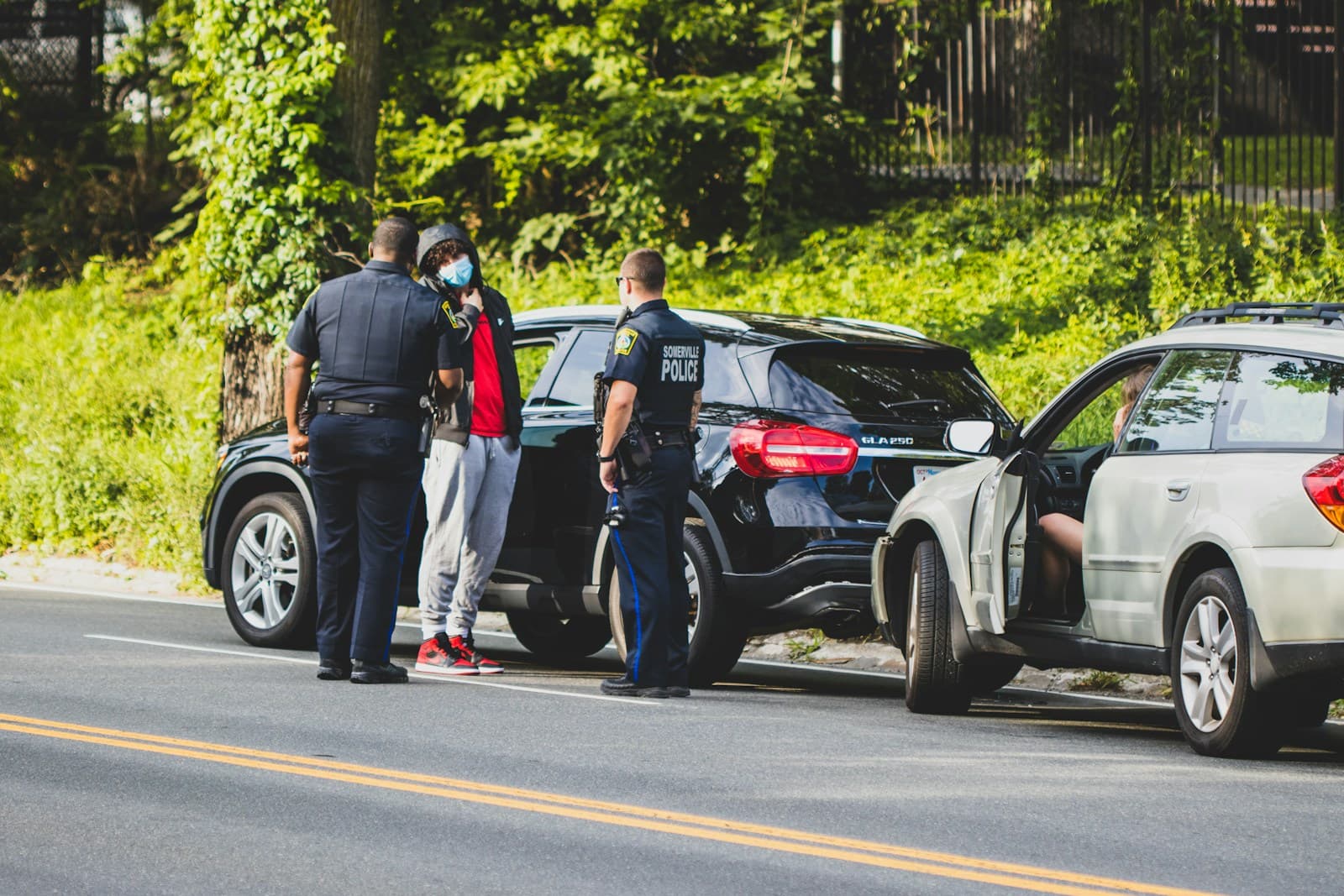
If your RDP is approved, the hearing officer issues a permit valid for the period specified on your application — typically the length of the semester or school year. The permit lists your approved driving purposes, approved days and hours, and specific route restrictions. Photocopy the permit and keep a copy in the vehicle at all times. Illinois law enforcement can verify RDP status electronically, but having the physical permit avoids confusion during traffic stops.
The total monthly cost stack for a student driver under 21 with a DUI-triggered RDP in Illinois runs approximately $8 application fee upfront, $75 to $150 BAIID installation, $85 monthly BAIID monitoring, and $220 to $380 monthly SR-22 insurance premium. Non-owner SR-22 policies drop the insurance line to $85 to $140 per month. Over a four-month semester, expect to pay $1,500 to $2,200 total to maintain legal school-driving privileges.
Start by calling the Illinois Secretary of State Safety and Financial Responsibility Division to confirm your suspension cause, verify RDP eligibility, and schedule a hearing. Then contact your school registrar to request enrollment verification and a signed class schedule. If SR-22 is required for your trigger, compare carriers writing high-risk and non-owner policies in Illinois and request quotes that include SR-22 filing. Get coverage in place before your hearing date — the state will not approve an RDP without proof of active SR-22 on file.