The School-Commute Suspension Problem Illinois Students Face
Your Illinois driver's license was suspended and you have a community college class schedule you cannot miss without losing the semester. The Secretary of State website says a Restricted Driving Permit covers school purposes, but your first call to the Safety and Financial Responsibility Division raised more questions than it answered. The hearing officer mention, the BAIID requirement if your suspension came from a DUI, the SR-22 filing your insurer says will triple your premium — none of this appeared in the two-paragraph DMV explanation you read online.
Illinois allows school-purpose driving under a Restricted Driving Permit, but the approval process runs through a formal or informal hearing administered by the Secretary of State, not a simple DMV counter transaction. The cheapest legal path depends on what triggered your suspension, whether you own the vehicle you will drive, and whether the hearing officer interprets your class schedule as sufficiently narrow to approve specific route and time restrictions. This article walks the Illinois-specific RDP pathway for students, names the cost stack you will actually pay, and identifies the SR-22 carrier strategy that cuts premium impact when your underlying violation requires filing.
Compare car insurance rates in your state
Get quotes from licensed carriers — no obligation, no spam, results in minutes.
Get Your Free QuoteIllinois RDP Application Fee
$8
The base application fee for a Restricted Driving Permit in Illinois is $8, paid at the time of hearing. This fee does not include BAIID costs for DUI-related suspensions, SR-22 filing fees, or the premium increase triggered by the filing requirement.
Illinois Secretary of State fee schedule
What the Restricted Driving Permit Actually Covers for School
The Illinois Restricted Driving Permit allows driving for specific approved purposes during defined hours on defined routes. School purposes qualify, but the approval is not automatic. You must demonstrate enrollment through registrar verification, provide your class schedule with building locations and meeting times, and justify the route between your residence and campus. The Secretary of State hearing officer assigns the specific days, hours, and geographic boundaries your RDP covers.
Illinois distinguishes between informal hearings (walk-in availability at Secretary of State offices for non-DUI suspensions) and formal hearings (scheduled proceedings with a hearing officer for DUI revocations and certain serious offenses). DUI-related suspensions require a formal hearing. Most other suspension types qualify for the faster informal process. The hearing determines whether your stated need — attending community college, trade school, or continuing education classes — meets the hardship threshold and whether the routes you propose are narrowly tailored to that need.
The structural friction Illinois students hit: hearing officers approve campus-commute hours but routinely deny buffer time for parking, walking from lot to classroom, or stopping for required course materials on the way. A class that starts at 8:00 a.m. may receive RDP approval for 7:30 a.m. to 8:15 a.m., leaving no margin for traffic delay or the 10-minute walk from the commuter lot. Students who arrive early to secure parking risk driving outside approved hours. The RDP does not flex for practical campus realities.
Illinois RDP approval grants exact class-schedule hours, not arrival-to-departure windows. Parking 15 minutes early puts you outside permit terms and triggers revocation if stopped.
What Documentation the Illinois Hearing Requires

You must provide a registrar-issued enrollment verification letter on school letterhead confirming your current-semester registration status, program of study, and anticipated completion date. A printout from the student portal does not meet the standard. The letter must be signed by a registrar or dean's office representative. You must also provide a detailed class schedule listing course names, meeting days, start and end times, building names or addresses, and instructor contact information if available. If your program requires lab hours, clinical rotations, or fieldwork at off-campus sites, you must document those locations and hours separately.
If your suspension was DUI-related, you must also provide proof of completion or enrollment in a drug and alcohol evaluation program as required under Illinois statute. The hearing officer will not approve an RDP for DUI cases without this documentation. If your suspension involved unpaid fines or tolls, payment must be completed before the hearing — Illinois does not issue RDPs as a workaround for financial obligations. The hearing officer checks payment status in real time during your appointment.
Related Articles



BAIID Requirement and Monthly Cost for DUI Suspensions
Illinois uses a Breath Alcohol Ignition Interlock Device (BAIID) for all DUI-related Restricted Driving Permits. The BAIID is not optional. Installation occurs before the hearing, and you must provide proof of installation as part of your application documentation. The device requires a breath sample before the vehicle will start and periodic rolling retests while driving. BAIID vendors charge installation fees ranging from $70 to $150 and monthly monitoring fees averaging $85 to $95.
The total monthly cost of BAIID compliance runs approximately $3 per day when amortized across a 30-day billing cycle. Installation and calibration appointments must occur at a state-approved BAIID vendor location. If you miss a scheduled calibration or fail a rolling retest, the Secretary of State receives an automated violation report and may revoke your RDP without additional hearing. Students whose class schedules conflict with vendor business hours face a coordination problem — BAIID vendors do not offer evening or weekend calibration in most Illinois counties.
First-offense DUI drivers under Illinois Statutory Summary Suspension must complete a mandatory 30-day hard suspension period before BAIID-equipped RDP eligibility begins. Those who refused chemical testing face a longer hard period. The school semester does not pause during the hard suspension window. Students suspended in late August or early September often lose the fall semester entirely before RDP eligibility opens.
Non-Owner SR-22 Premium Illinois
$85–$140/mo
Students who do not own a vehicle but need SR-22 filing to satisfy Illinois reinstatement requirements can purchase non-owner liability policies with embedded SR-22 filing. Monthly premiums for non-owner SR-22 in Illinois range from $85 to $140 depending on violation history and county. This cost sits below the $180–$260/month range for standard policies with SR-22 endorsements.
Illinois carrier rate filings, non-standard tier
SR-22 Filing Strategy to Minimize Premium Cost
Illinois requires SR-22 filing for DUI suspensions, uninsured-driving violations, and certain repeat-offense scenarios. The SR-22 is a certificate of financial responsibility your insurer files with the Secretary of State proving you carry at least the state's minimum liability limits: $25,000 bodily injury per person, $50,000 per accident, $20,000 property damage. The SR-22 filing itself costs $15 to $50 depending on carrier, but the premium increase triggered by the filing requirement is where cost accumulates.
Students who own a vehicle and need SR-22 filing should compare quotes from non-standard carriers before adding SR-22 to a family policy. Adding a suspended-license student driver to a parent's policy often increases the family premium by $150 to $300 per month. Purchasing a standalone non-owner SR-22 policy in the student's name costs $85 to $140 per month and does not impact the parent policy. The non-owner policy covers the student when driving any vehicle with permission, satisfies the Illinois SR-22 filing requirement, and terminates cleanly when the SR-22 period ends without affecting family coverage.
Carriers writing non-owner SR-22 in Illinois include Progressive, GEICO, Dairyland, The General, and GAINSCO. Acceptance Insurance and Bristol West also write this market but require broker contact rather than online quote. The non-owner policy provides liability coverage only — no collision, no comprehensive — which is sufficient for RDP compliance and significantly cheaper than full-coverage policies suspended-license students rarely qualify for at competitive rates.
What Happens If You Drive Outside Approved RDP Hours
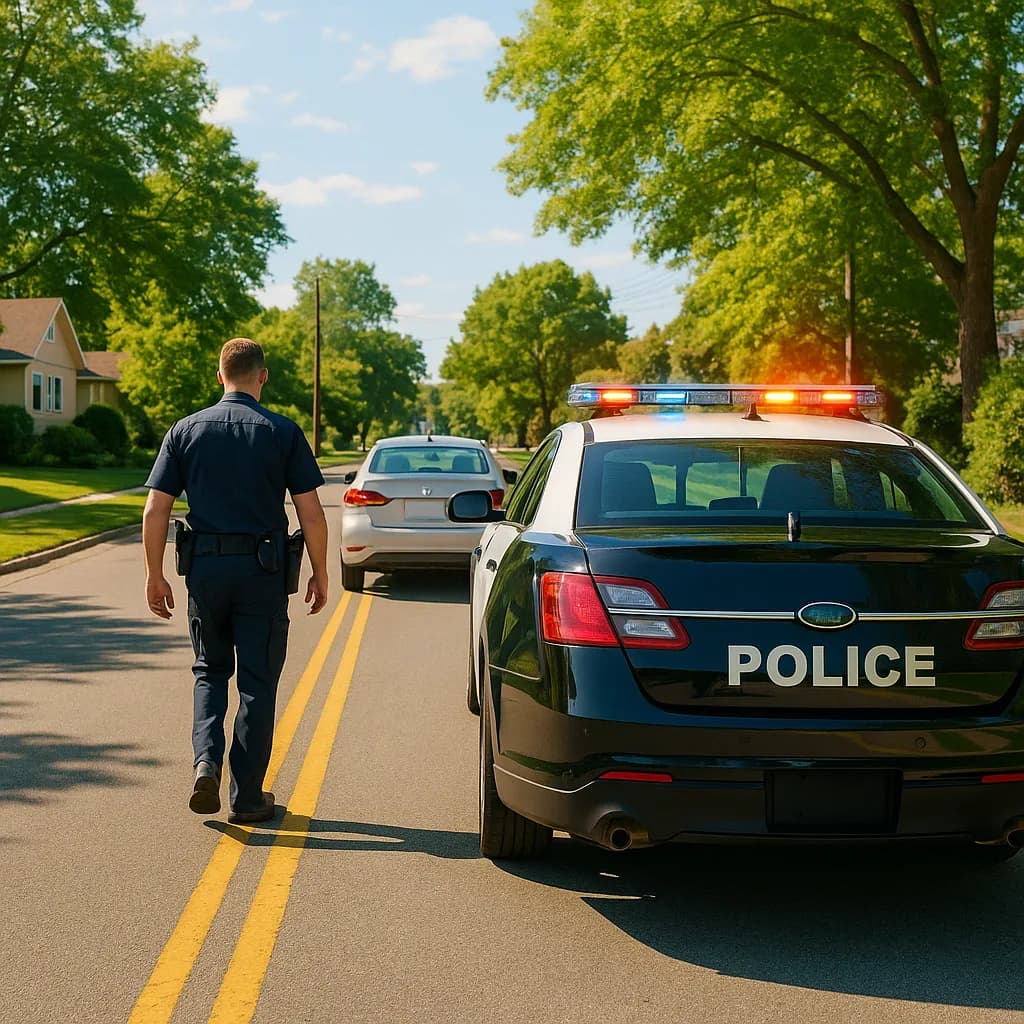
Driving outside the specific hours, routes, or purposes approved on your Illinois Restricted Driving Permit is treated as driving on a suspended license under Illinois statute. If stopped, the officer will verify your RDP terms through dispatch. Driving at 7:15 a.m. when your approved window starts at 7:30 a.m., or driving to a coffee shop one block off your approved route, triggers arrest and vehicle impoundment in most Illinois counties. The RDP does not grant discretionary flexibility. The terms are absolute.
Violation of RDP terms results in automatic RDP revocation, extension of your underlying suspension period, and potential criminal charges under 625 ILCS 5/6-303 for driving while suspended. Students who lose RDP eligibility due to violation cannot reapply until the full original suspension period expires. The Secretary of State does not grant second-chance RDPs for students who demonstrate they cannot comply with restriction terms. One violation ends the school-driving pathway for the remainder of the suspension.
Compare Carriers Now to Lock the Lowest School-Commute Rate
The Illinois RDP gives you legal school-driving access during suspension, but the cost stack — $8 application fee, $85 to $95 monthly BAIID monitoring if DUI-related, $15 to $50 SR-22 filing fee, and the premium increase triggered by the SR-22 requirement — runs $100 to $240 per month depending on your violation and vehicle ownership status. The cheapest configuration is a non-owner SR-22 policy with no BAIID requirement, which applies to students suspended for uninsured driving or point accumulation who do not own a vehicle. DUI suspensions always add BAIID cost and cannot be reduced below the monthly monitoring floor.
Start the comparison process before your Secretary of State hearing. The hearing officer will ask whether you have secured SR-22 filing, and arriving with proof of coverage strengthens your application. Compare non-owner SR-22 quotes from at least three carriers writing Illinois to identify the lowest monthly rate for your county and violation type. Lock coverage before the hearing date so the SR-22 filing reaches the Secretary of State within the processing window your RDP approval requires.