The School Commute Problem Most Suspended Illinois Students Face
Your license was suspended two weeks before fall semester starts. You're enrolled at Harper College, Joliet Junior College, or a trade school campus 20 miles from home with no CTA access. Missing the semester means losing financial aid, delaying graduation a full year, or dropping a certification track you've already paid for. You need to know whether Illinois law lets you drive to school under a restricted license, what documentation your registrar must provide, and whether you can file fast enough to make the first day of class.
Illinois offers a Restricted Driving Permit (RDP) that explicitly allows school-purposes driving for suspended students, but the application process runs through circuit court with a formal hearing requirement. Most students discover this too late — the petition must be filed 3-4 weeks before the semester starts to clear the hearing backlog and receive the permit before enrollment deadlines pass. If you're reading this the week before classes begin, you've likely missed the procedural window for fall semester approval.
Compare car insurance rates in your state
Get quotes from licensed carriers — no obligation, no spam, results in minutes.
Get Your Free QuoteIllinois RDP Hearing Window
3-4 weeks
Circuit court hearing for school-purposes Restricted Driving Permit must be scheduled 3-4 weeks before semester start to receive permit approval before enrollment deadlines. Cook County and DuPage County courts schedule hearings 21-28 days out from petition filing date.
Illinois Secretary of State RDP procedural guidance
What Illinois Law Actually Allows for School Driving
Illinois Restricted Driving Permits allow school-purposes driving under 625 ILCS 5/6-206.1. The statute covers enrollment at any accredited educational institution: community college, four-year university, trade school, cosmetology academy, or vocational certificate program. High school students under 18 face different rules — most counties treat K-12 school commutes as exempt from suspension impact because school attendance is legally compulsory until age 17, though this varies by judge and county.
The RDP approval is not automatic. You file a petition in the circuit court where you live, requesting driving privileges for specific purposes during specific hours. The petition must list your school's street address, your class schedule with exact meeting times, and the route you will drive. The court grants or denies the petition at a formal hearing after reviewing your suspension cause, your driving record, and the necessity of the school commute.
School-purposes RDPs typically allow direct-route driving to and from campus during class hours plus a one-hour buffer before and after scheduled class time. If your first class starts at 9:00 AM and your last class ends at 3:00 PM, your approved driving window is typically 8:00 AM to 4:00 PM on class days only. Driving to campus jobs, student organization meetings, or study sessions in the library after approved hours violates the permit terms and triggers immediate revocation plus criminal charges for driving on a suspended license.
Most Illinois RDP denials happen because students file the petition after suspension starts — courts view the delay as evidence the commute is optional, not necessary.
Documentation Your School Must Provide Before Filing
Your registrar or student services office must produce a letter on official school letterhead confirming three facts: your current enrollment status, your registered class schedule with course names and meeting times, and the campus street address where classes are held. The letter must be signed by a registrar, dean, or enrollment officer with their printed name and title. If you attend multiple campuses (for example, Harper College's main Palatine campus plus the Northeast Center in Wheeling), the letter must list both addresses and specify which classes meet at which location.
You also need a copy of your printed class schedule showing course registration for the current semester. The schedule must show credit hours to prove full-time or part-time status — some judges deny RDPs for part-time students on the theory that a lighter course load allows scheduling around public transit availability. If you're enrolled in a vocational program with lab or clinical hours at off-campus sites (nursing clinicals, welding shop practicums, automotive training bays), document those hours separately with facility addresses and supervision contact information. Courts often deny RDP petitions for off-campus clinical sites unless supervision letters verify attendance requirements.
Related Articles


The Illinois RDP Petition Filing Path
You file the RDP petition in the circuit court of the county where you live, not where the school is located. Cook County filers use the Daley Center; DuPage County filers use the courthouse in Wheaton; Will County filers use Joliet. The petition form (available on most circuit court websites under traffic or driver services) requires your suspension case number, the suspension trigger, the suspension period, and the specific driving privileges you're requesting.
The filing fee is typically $25-$50 depending on county. You pay at the circuit clerk's office when you file the petition. The clerk schedules a hearing date 3-4 weeks out — this is the bottleneck that kills most last-minute filings. If you file August 10 for a semester starting August 25, your hearing date will land in early September, after the semester has already started. Many colleges drop students for non-attendance after the first week, which means you lose your enrollment before the court ever approves your permit.
At the hearing, you present your school documentation, your suspension paperwork, and your proposed driving schedule to the judge. The Illinois Secretary of State's office may send a representative to oppose the petition if your suspension involved a DUI, multiple violations, or a prior RDP revocation. The judge evaluates whether your need is genuine, whether granting the permit creates public safety risk, and whether your proposed hours are narrowly tailored to school necessity. If approved, the judge signs an order granting the RDP. You take that order to the Secretary of State Driver Services facility to receive the physical permit card, which takes an additional 3-5 business days.
If your suspension was triggered by a DUI, the court may require ignition interlock device installation before granting the RDP. Illinois requires IID for all DUI-related RDPs regardless of BAC level or whether it was your first offense. The IID must be installed by a state-approved vendor before your hearing date — most judges will not approve the RDP until you present proof of installation. IID installation costs $100-$150 upfront plus $75-$100/month monitoring fees. If your suspension was triggered by unpaid tickets, points accumulation, or uninsured driving (not DUI), IID is not required.
Illinois IID Monitoring Cost
$75-$100/month
Ignition interlock device monitoring fees for DUI-triggered Restricted Driving Permits run $75-$100 per month in Illinois, on top of the $100-$150 installation charge. The device must remain installed for the full suspension period, typically 6-12 months for first DUI offenses.
Illinois Secretary of State IID vendor fee schedules
What Happens When You Drive Outside Approved Hours
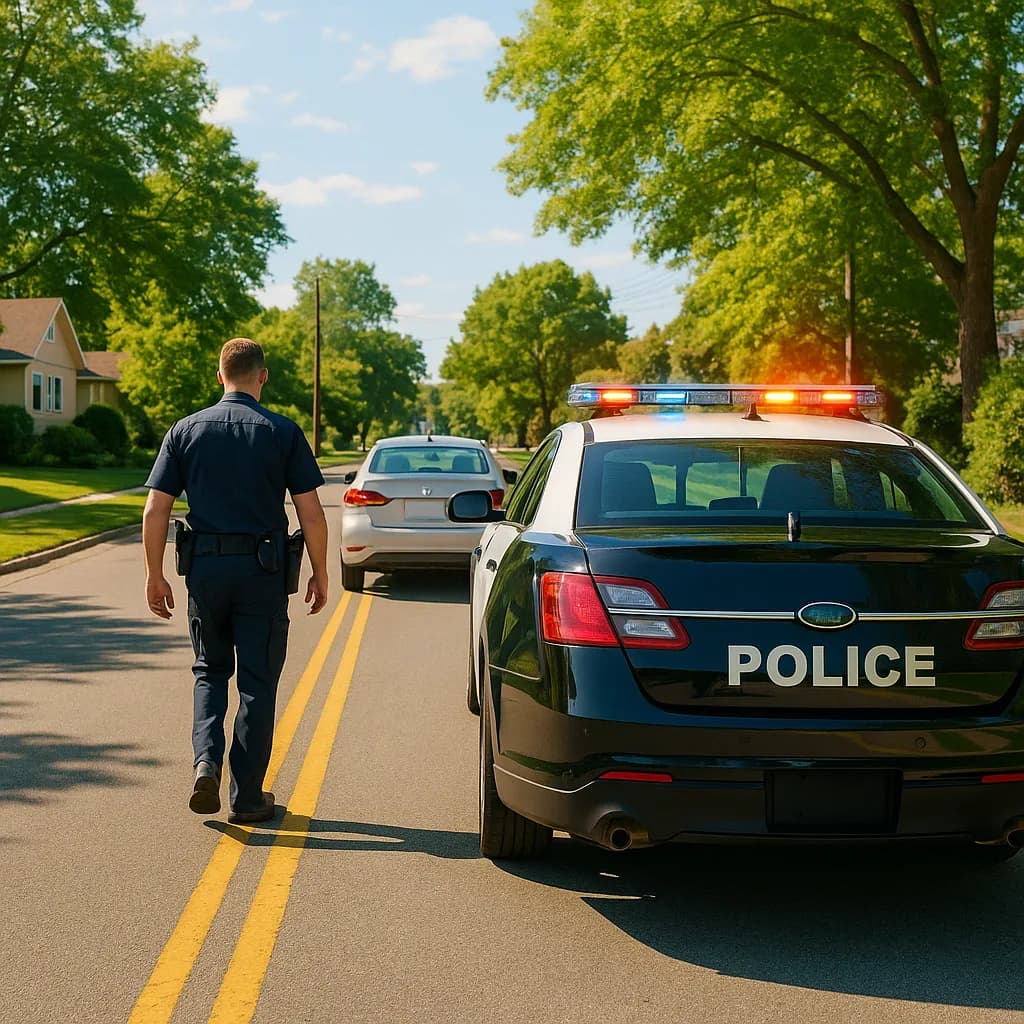
Illinois treats RDP violations as criminal offenses, not traffic infractions. If a trooper stops you outside your approved driving window — driving to campus on a non-class day, driving home from a campus job after your permit expires at 4:00 PM, making a grocery stop on the route home — you're charged with driving on a suspended license under 625 ILCS 5/6-303. First offense is a Class A misdemeanor carrying up to 364 days in jail and a $2,500 fine. The RDP is immediately revoked, your suspension period is extended, and you lose eligibility to apply for another RDP for the remainder of the suspension.
Campus police and local police near community colleges routinely run plates in student parking lots during evening hours to catch RDP violations. If your permit allows driving until 4:00 PM but you're parked on campus at 7:00 PM for a study group, your car is flagged when an officer runs the plate and sees the suspended status. You return to your car to find it towed and a warrant issued for driving on a suspended license. The violation timestamp is the moment you drove onto campus, not the moment the officer discovered the car — prosecutors use campus security camera footage to prove you drove in during restricted hours.
What This Means for Your Fall Semester
If you're suspended now and need to drive to school this fall, count backward from your first day of class. You need 3-4 weeks for the hearing window, plus 3-5 business days after court approval to receive the physical permit card. That means filing the petition a full month before the semester starts. If your suspension just took effect in mid-August and classes start in late August, you've missed the procedural window for fall semester approval. Your options narrow to public transit, carpooling with another student, moving closer to campus, or deferring enrollment to spring semester and filing the RDP petition in November for a January start.
If you have time to file before the window closes, gather your registrar verification letter and class schedule now. Call the circuit clerk's office in your county and ask for the next available RDP hearing date. If that date falls before your semester starts, file immediately. If it falls after the semester starts, ask whether the judge allows expedited hearings for students facing enrollment deadlines — some counties accommodate this, most do not. If expedited hearings are unavailable, you're looking at spring semester as your earliest school-commute option under an RDP.